
Feline Body Language: Learn to Understand Your Cat
Introduction
Feline communication goes far beyond the sounds cats produce. In fact, most communication between felines occurs silently, through a rich and sophisticated body language that involves body positions, tail movements, facial expressions, ear posture, and specific behaviors. For owners, learning to decipher this language is one of the most valuable ways to deepen the bond with the animal and respond to its needs more precisely and empathetically.
Unlike dogs, whose body expressions tend to be more exuberant and easy to interpret, cats communicate their emotional states in a more subtle and frequently more ambiguous way. The same signal can have different meanings depending on the context, the combination with other body signals, and the individual animal’s history. This article offers a comprehensive guide to interpreting your cat’s body language with greater accuracy and confidence.
The Tail as an Emotional Thermometer
The tail is one of the most expressive indicators of a cat’s emotional state and deserves special attention when reading feline body language.
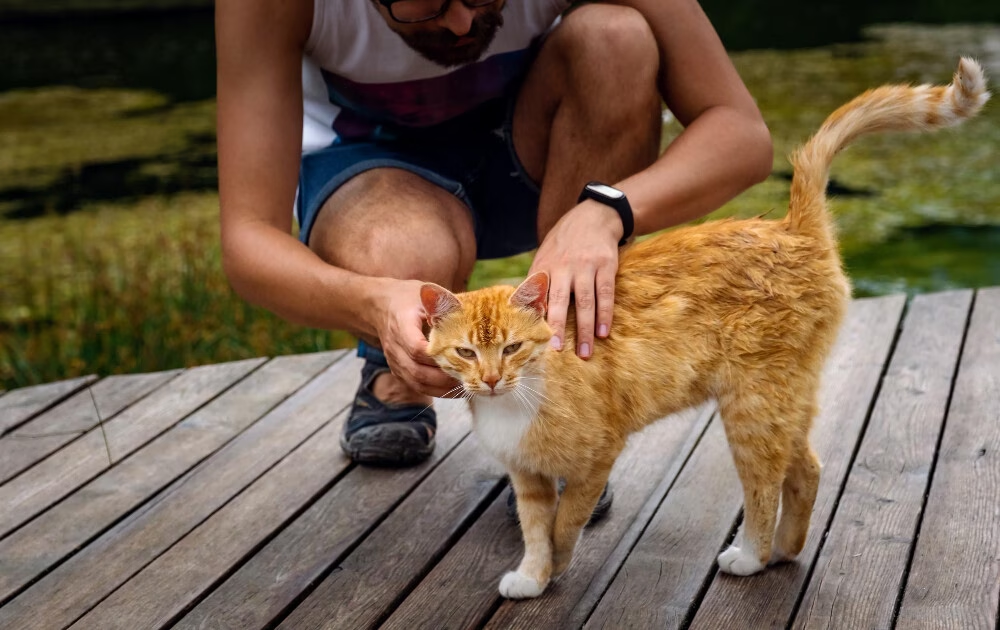
Tail Held Vertically Upright A tail raised in a vertical position, especially when accompanied by a slight curve at the tip, is one of the most positive signals in feline language. It indicates confidence, willingness for social interaction, and a favorable mood. Cats that approach with their tail raised are signaling openness and affection. Kittens frequently adopt this posture when approaching their mother, and domestic cats transfer this behavior to interaction with their owners.
Horizontal Tail A tail held horizontally, parallel to the ground, indicates a neutral state or moderate alertness. The cat is attentive to the environment but shows no obvious signs of stress or excitement.
Low Tail or Tucked Between the Legs A tail positioned low, close to the body, or tucked between the hind legs indicates fear, submission, or significant discomfort. This signal is frequently accompanied by a hunched posture and backward-facing ears.
Puffed and Arched Tail When a cat puffs up the fur on its tail, making it visibly more voluminous, it is in a state of maximum alertness, intense fear, or defensive aggression. This signal, often accompanied by an arched back, is a response to what the animal perceives as an imminent threat. The goal is to appear larger and more intimidating to the aggressor.
Moving Tail Tail movement also communicates distinct emotional states. A slow, wide swaying generally indicates that the cat is focused or mildly irritated. Rapid, abrupt movements of the tail tip are clear signs of growing irritation or agitation and serve as a warning that the animal is approaching the limit of its tolerance. Unlike dogs, in cats tail wagging rarely indicates happiness.
The Ears as Indicators of Attention and Mood
Ears Upright and Facing Forward Upright ears directed forward indicate curiosity, attention, and interest. The cat is engaged with something in its environment and in a positive or neutral mental state.
Ears Slightly Tilted to the Sides Ears that tilt slightly to the sides indicate relaxation and comfort. This posture is commonly observed in cats that are resting in a safe environment.
Ears Turned Backward or Flattened Ears turned backward, in an intermediate position, can indicate mild irritation or discomfort. When completely flattened against the head, the signal is one of intense fear or aggression. This position protects the ears during possible physical confrontations and is a clear sign that the animal is in a state of maximum alertness.
The Eyes and What They Reveal
Slow Blink The slow blink is one of the most significant and positive gestures in feline language. When a cat looks at you and blinks slowly, it is expressing trust, comfort, and affection. Recent research has confirmed that humans can use the slow blink to communicate with unfamiliar cats, increasing the animals’ willingness to interact. Returning the slow blink to your cat is a genuine way of communicating affection in its own language.
Dilated Pupils Very dilated pupils in a well-lit environment indicate intense excitement, fear, or aggression. Context is essential for correct interpretation: dilated pupils during play indicate positive excitement, while the same dilated pupils accompanied by a hunched posture and flattened ears indicate fear.
Constricted Pupils Pupils in a narrow slit shape, under normal lighting conditions, can indicate deep relaxation or, depending on the context, confident aggression. A relaxed and contented cat frequently presents constricted pupils with half-closed eyes.
Half-Closed Eyes Partially closed eyes in a calm environment indicate relaxation, pleasure, and a sense of security. This expression is commonly observed in cats being petted in their preferred spots.
Fixed and Intense Eye Contact A fixed, intense stare without blinking, directed at another animal or person, is generally a sign of challenge or threat. In feline language, prolonged, unwavering eye contact is considered confrontational. For this reason, when interacting with unfamiliar or shy cats, looking away and blinking slowly demonstrates that you pose no threat.
General Body Posture
Relaxed and Stretched Body A cat lying on its back with relaxed paws and its body fully extended is in its most vulnerable state and only adopts this posture in environments where it feels completely safe. Exposing the abdomen is a sign of deep trust, although not all cats appreciate being petted in that area, even when they expose it.
Hunched Posture A cat with a hunched body, lowered head, limbs close to the torso, and tail wrapped around the body is signaling discomfort, fear, or an attempt to go unnoticed. This posture indicates that the animal does not feel safe in its current environment.
Arched Back An arched back combined with raised fur is a classic defensive posture, adopted when the cat feels threatened and wants to appear larger. When arching occurs during a petting session, especially near the base of the tail, it may indicate intense pleasure or hypersensitivity to touch.
Specific Behaviors and Their Meanings
Kneading The behavior of kneading soft surfaces with the front paws — popularly known as “making biscuits” — is a remnant of the neonatal behavior of stimulating milk production in the mother. In adult cats, this behavior is associated with states of deep relaxation, comfort, and affection. It is considered one of the greatest indicators that the cat feels completely safe and content.
Rubbing the Body and Head When a cat rubs its head, chin, or body against you, it is performing scent marking through the glands present in those areas. This behavior, called bunting, is a way of marking with its own scent something or someone the cat considers part of its social group. It is a gesture of affiliation and belonging.
Showing the Belly As mentioned earlier, exposing the abdomen is a sign of trust. However, it is important to distinguish between belly exposure as an invitation for petting and as a sign of comfort that does not necessarily indicate a desire for physical contact. Many cats expose their belly but react negatively when touched in that area, which frequently surprises less experienced owners.
The Importance of Reading Signals Together
A common mistake in interpreting feline body language is analyzing isolated signals without considering the context and combination with other indicators. Accurate reading requires simultaneously observing the position of the tail, ears, and eyes, the general body posture, and the environmental context in which the behavior occurs.
For example, a cat with ears slightly turned back may simply be concentrating on something, mildly irritated, or in a state of moderate alertness. To determine the correct meaning, it is necessary to observe whether the tail is wagging rapidly, whether the pupils are dilated, and what the general body posture is.
Conclusion
Feline body language is a complex, subtle, and highly contextual communication system. Dedicating time and attention to learning how to interpret the signals your cat emits daily is an investment that strengthens the emotional bond, improves the quality of interaction, and allows you to identify emotional and physical states that deserve attention. Each cat is a unique individual with its own expressive repertoire, and knowing the particularities of your animal is just as important as knowing the general patterns of the species. With attentive observation and patience, communication with your feline will become increasingly rich and satisfying for both sides.

David Bencivenga
Writer, advertising copywriter and SEO analyst, I am originally from New York and have been passionate about reading and writing since I was little. Books have always been my companions and favorite pastime, which led me to my profession. I hope you enjoy each of my texts and that they can help you in some way. Happy reading!